Conditions We Treat

Lumbar Spinal Stenosis Physical Therapy in Washington DC and Bethesda

Lumbar spinal stenosis — narrowing of the spinal canal that compresses nerves and limits walking tolerance — is one of the most common reasons older adults consider spine surgery. Structured physical therapy delays or avoids surgery for many patients and dramatically improves walking distance and standing tolerance.

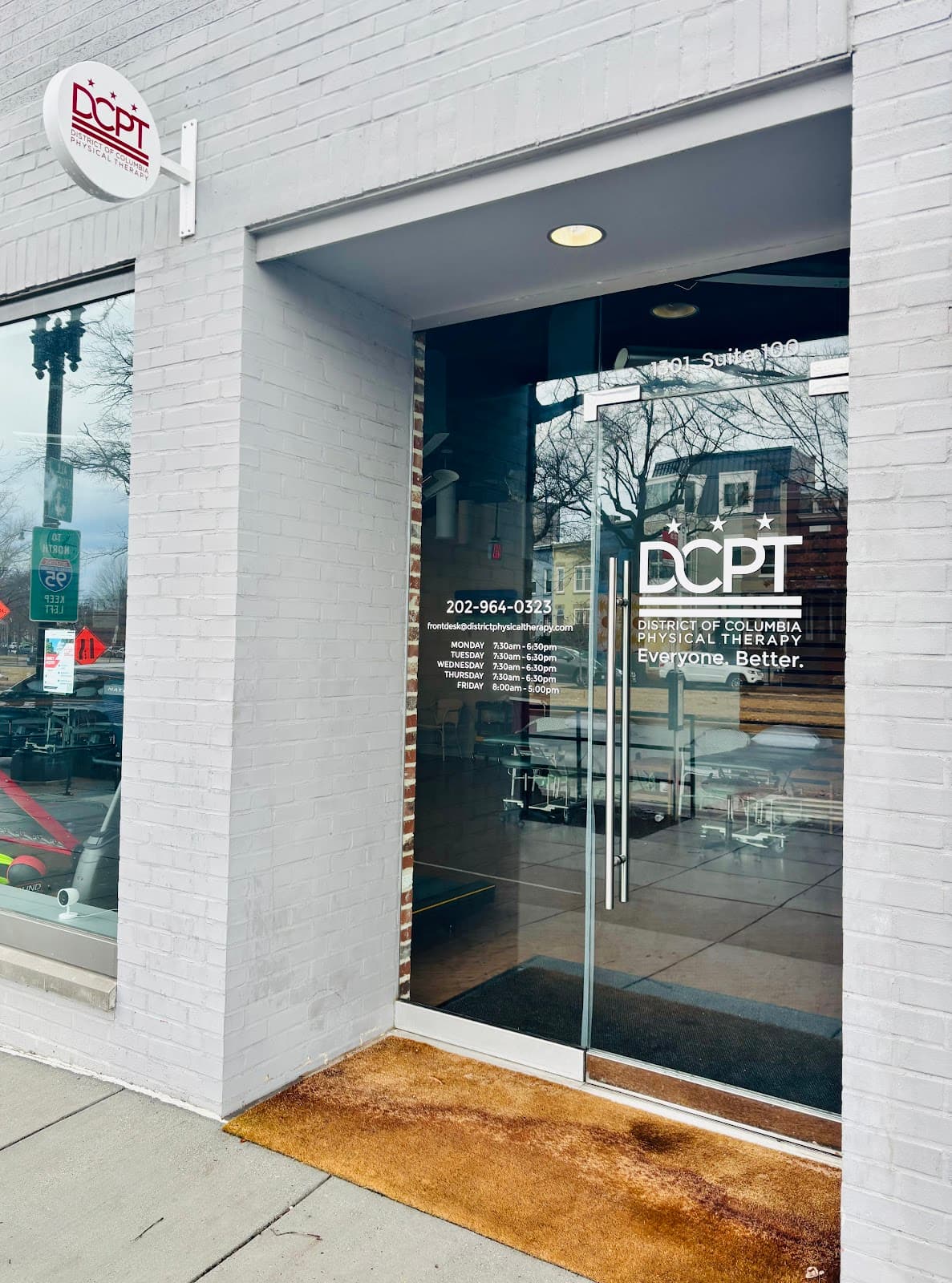
District Physical Therapy clinic — Lumbar Spinal Stenosis treatment in Washington DC and Bethesda

How stenosis presents

Classic symptoms: leg pain, heaviness, or weakness with walking and standing, relieved by sitting or leaning forward (like over a grocery cart). Many patients report progressively shorter walking tolerance over months to years. Bending forward and sitting feel good; standing upright and walking flat ground feel hard.

Why PT works for stenosis

Stenosis pain comes from compression of nerves in a narrowed canal. PT doesn't change the bony anatomy — but it dramatically changes function. We work on flexion-biased decompression positions, hip and trunk strength to share load away from the spine, and progressive walking tolerance. Multiple RCTs show PT yields outcomes comparable to surgery for many stenosis patients at 1- and 2-year follow-up.

What evaluation looks like at DCPT

60-minute evaluation with a Doctor of Physical Therapy. We assess walking tolerance with a structured test, hip and core strength, neural mobility, and functional positions. We review imaging if you have it but don't rely on it — clinical exam drives the plan. First treatment same visit. Plans run 10–16 visits over 8–12 weeks for meaningful change.

Treatment approach

Flexion-biased exercise (bike, lean-forward walking, repeated flexion positions), hip and gluteal strengthening to offload the lumbar spine, manual therapy for hip and thoracic mobility, neural mobility work, and a graded walking program with rest-station strategies. We pair this with realistic expectations — stenosis is a chronic structural finding; the goal is restored function, not radiographic change.

Costs and insurance

Medicare, CareFirst, Aetna, United, and Tricare all cover PT for spinal stenosis. Self-pay is $150 per session. Many patients qualify for the KX modifier extension under Medicare given the chronic nature of the diagnosis.

Ready to start?

Same-week evaluations at Capitol Hill, Bethesda, and in-home throughout the DMV.

Book a Stenosis Evaluation

Frequently asked questions

Can PT actually avoid surgery for stenosis?

For many patients, yes. The SPORT trial and follow-up studies show PT yields outcomes comparable to surgery for many patients with lumbar stenosis. Severe cases with progressive weakness or bowel/bladder issues still need surgical evaluation.

How long until I can walk farther?

Most patients see measurable improvement in 6–8 weeks. Continued gains often happen out to 12 weeks and beyond with home program adherence.

Will my MRI findings get worse over time?

Often yes — stenosis tends to progress slowly with age. But MRI findings correlate poorly with symptoms. Function can improve dramatically even as imaging stays the same or worsens.

Is the recumbent bike better than the treadmill for stenosis?

Usually yes, at least to start. Recumbent biking lets you stay in a flexion-biased position that takes pressure off the nerves. We progress walking carefully over time.

Do I need to see a spine surgeon first?

Not unless you have red flags (progressive weakness, bowel/bladder changes, severe night pain, history of cancer). Start with PT — we'll let you know if surgical evaluation is appropriate.

What about injections?

Epidural steroid injections can give temporary relief for some patients, but the effect is usually short-lived. They can be useful adjuncts when you're trying to participate in PT but pain is limiting; they're not a long-term solution on their own.